40 Instagram Post Ideas for Yoga Studios
By IndieAM ·
The best Instagram posts for a yoga studio make a nervous beginner think, "I could do that." A feed of advanced poses is beautiful, but it quietly tells the people who'd benefit most that yoga isn't for them. Posts that show what a first class is like, what the props are for and who your teachers are do the welcoming for you. Below are 40 ideas grouped by type, with the format that suits each. Pick four or five for the next two weeks.
The examples are made up to show the idea. Swap in your own classes and teachers, and skip anything that doesn't fit your studio.
Why advanced poses don't fill beginner classes
Many people who'd love a gentle class think they need to be flexible first. A feed of handstands and splits confirms it.
Instagram's Adam Mosseri has said its top ranking signals are watch time, likes and sends. That was said in January 2025, and platforms change, but it's a useful test. "You don't need to touch your toes" gets sent to the friend who keeps saying they're too stiff for yoga. A perfect arm balance mostly gets a quick like from other yogis.
So keep a few beautiful poses, and add the ideas below around them.
For beginners
- What happens in a first class. Step by step, as a carousel: arriving, the mat, the teacher, the end.
- Do you need to be flexible to start? Answer it kindly.
- What to bring and wear. And what you don't need to buy.
- What the props are for. Blocks, straps, blankets, bolsters, and why beginners use them.
- Which class to try first. A short guide to your schedule.
- What the words mean. Savasana, vinyasa, child's pose, in plain language.
- Where to put your mat if you're nervous: near the back, near the door.
- What the teacher will and won't do. For example, whether they ask before offering hands-on help.
Simple practice
- How to modify a forward fold. A short video with a block.
- A minute of breathing to try at your desk.
- Three stretches after a long day of sitting.
- Child's pose, three ways.
- How to get up from the floor with less strain.
- A short wind-down for bedtime.
- One pose, explained, with what to feel and what to avoid.
- What to do if something hurts: stop, and tell the teacher.
Meet the studio
- Meet each teacher. Why they started teaching, and who their classes suit.
- Meet the owner. Why you opened the studio, and what you still love about it.
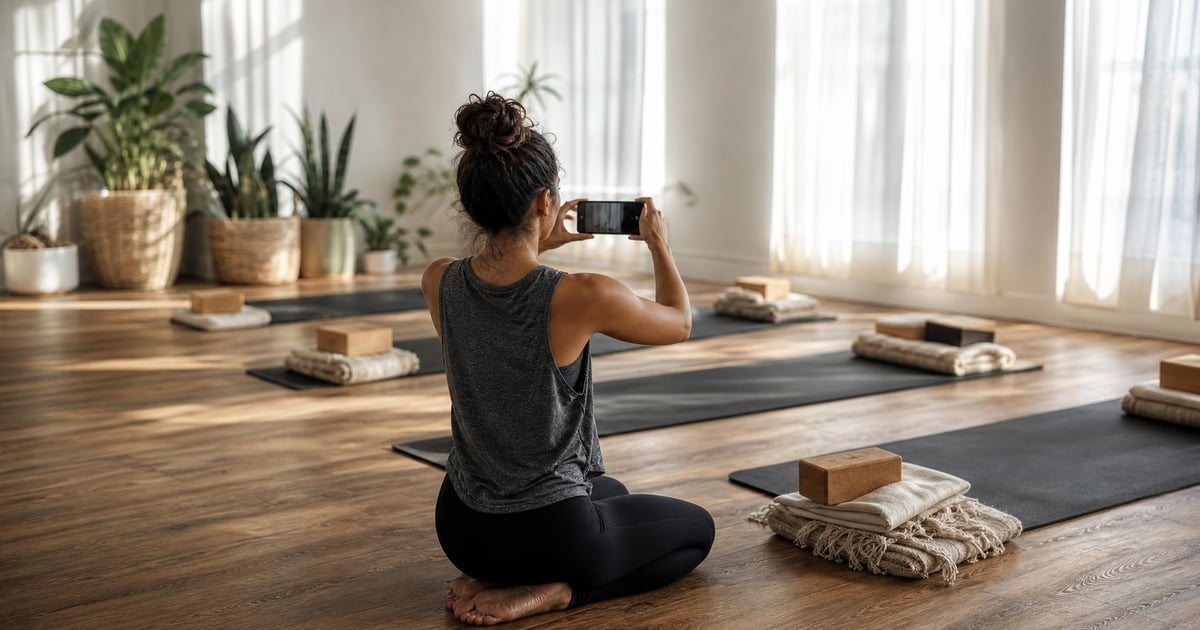
- The studio before the first class of the day. Quiet, warm, mats laid out.
- Your space. The changing rooms, the props wall, the tea corner.
- What a restorative class feels like.
- A class from the back of the room, with students' permission, no faces needed.
- What your teachers are learning. A training, a workshop, a book.
- The playlist, or why some classes have none.
Classes, series and workshops
- This week's schedule. A clear Story every Monday.
- How the beginner series is built, week by week.
- The early class and who it suits.
- Class pack or membership: which fits your week.
- A workshop or a visiting teacher: who it's for, what happens, how to sign up.
- Spots left in the next series. Only when it's true.
- Holiday schedule. Post it early, and again the day before.
- Private sessions, if you offer them.
Your students
- A student's story, in their own words, with their permission.
- Milestones: a hundredth class, a first full series.
- Why students come to the early class. A short quote or two.
- Students who practice together: friends, couples, parents and grown-up children.
Your neighbors
- A neighbor you love. The café next door, the physio down the road.
- A local walk or green space for a quiet minute.
- A local event you're part of, if you really are.
- This or that. "Morning or evening practice?" A poll in Stories is easy to answer.
Which format to use
- Reels for movement and breath: a modification, a minute of breathing, the studio waking up. Here's how to make Reels with just your phone.
- Carousels for anything with steps: the first class, the props, the beginner series.
- Single photos for a new teacher, the studio, a workshop.
- Stories for the week's schedule, spots left, polls.
Four things to keep you out of trouble
- Be careful with health promises. Words like "detox", "heals" or "cures" can be read as claims you'd need to back up. The FTC's guidance for health advertising expects health claims to be supported by competent and reliable scientific evidence. It's written for health products, but it's a good rule of thumb: describe how a class feels and what you do in it, rather than what it will cure.
- Ask before you show students. People in a quiet class may not want to be filmed, especially mid-pose. Ask in writing if you can, and take a post down if someone asks.
- Keep practice tips general. Suggest people with injuries or health conditions check with a professional first.
- Be careful with popular music. Osborne Clarke warns that most platform music libraries aren't licensed for commercial use. Silence, breath, or royalty-free music suits most yoga videos anyway. This isn't legal or medical advice.
How many of these should you post?
Three good posts a week is plenty for most studios, and we go through the evidence in how often to post. A simple mix for one week:
- one for beginners (1-8),
- one simple practice tip (9-16),
- one about the studio, a class or your news (17-40).
When a new series is coming, give it its own run of posts. Here's how to turn first-timers into regulars, and how to promote a yoga workshop.
If you'd rather not write them yourself
Teaching is the job, and posting is the chore that slips. You could:
- Write a week of posts in one quiet hour.
- Ask a teacher who enjoys it, and pay them for the time.
- Hire a freelancer. Here's what a social media manager costs.
- Use software that does the writing. IndieAM, which we make, plans a month of posts for your studio around the people you want to reach, writes them in your voice and adds the pictures. You can list what to avoid, such as "detox" or promising health benefits. You approve the plan and each post, and approved posts publish themselves to the Instagram, Facebook and YouTube accounts you connect. Your teachers can sign in to review posts too. Here's how it works for yoga studios.
Or start with number 4 today. Lay out a block, a strap and a blanket, say what each is for, and post it.