40 Instagram Post Ideas for Pilates Studios
By IndieAM ·
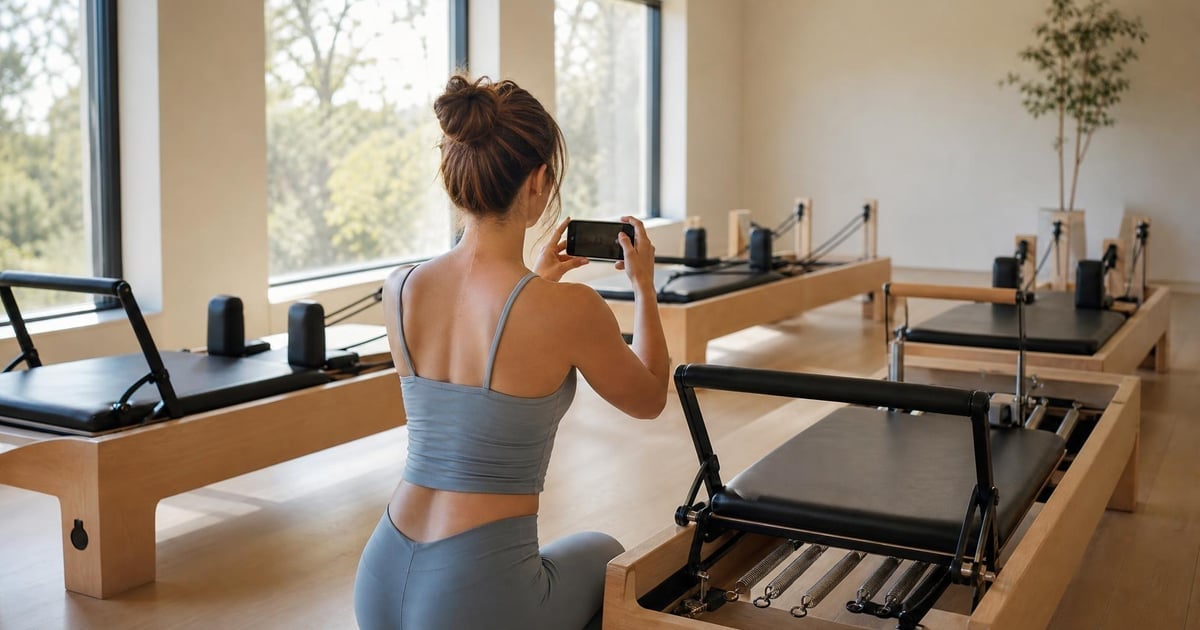
The best Instagram posts for a pilates studio take the fear out of the first class. Most people who've never tried pilates are nervous about the machine, the words and keeping up. Posts that explain the reformer, show the first ten minutes of a class and introduce your teachers do the convincing for you. Below are 40 ideas grouped by type, with the format that suits each. Pick four or five for the next two weeks.
The examples are made up to show the idea. Swap in your own classes and teachers, and skip anything that doesn't fit.
Why a feed of advanced moves doesn't fill beginner classes
Advanced reformer flows look beautiful, but to someone who's never been on one, they look like proof they'd be lost.
Instagram's Adam Mosseri has said its top ranking signals are watch time, likes and sends. That was said in January 2025, and platforms change, but it's a useful test. "What the springs on a reformer actually do" gets watched to the end and sent to the friend who keeps saying they'll try it. A perfect advanced sequence mostly gets a quick like from people who already practice.
So keep a few beautiful flows, and add the ideas below around them.
The reformer, explained
- What the springs actually do. Heavier isn't always harder.
- The parts of a reformer: carriage, footbar, straps, headrest.
- How to get on and off safely.
- What the teacher means by "neutral spine".
- Reformer or mat: which to start with.
- What the other equipment is for: the chair, the barrel, the tower, if you have them.
- How a teacher sets the springs for a beginner.
- Why classes are kept small.
For beginners
- What to wear and bring to your first class.
- Grip socks, explained.
- What happens in the first ten minutes of class.
- Answers to the questions beginners are too shy to ask.
- How often to come when you're starting out.
- What to tell the teacher before class, such as an old injury.
- What the intro series covers, week by week.
- What it feels like the next day. Honestly.
Exercises, one at a time
- A teacher explains one exercise in three steps.
- The most common mistake in a classic exercise, and the fix.
- One mat exercise to try at home.
- The same exercise, three levels.
- What "engage your core" actually means.
- How to breathe through an exercise.
- A quick stretch after a day at a desk.
- Where you should feel it, and where you shouldn't.
Meet the studio
- Meet each teacher. Why they started teaching, and who their classes suit.
- Meet the owner. Why you opened the studio.
- The studio before the first class of the day.
- How the reformers are cleaned between classes.
- What your teachers are learning: a training, a workshop.
- The playlist, or the quiet.
Classes and news
- This week's schedule, every Monday in Stories.
- The midday class: who it suits and what fifty minutes at lunch looks like.
- Spots left this week. Only when it's true.
- A new class, explained: who it's for, how hard it is.
- The intro offer, with its real terms.
- Holiday schedule. Post it early, and again the day before.
Your clients
- A client's story, in their own words, with their permission.
- Milestones: a fiftieth class, a first full class without a break.
- Why clients come at 7 a.m. A short quote or two.
- This or that. "Reformer or mat?" A poll in Stories is easy to answer.
Which format to use
- Reels for anything that moves: an exercise in three steps, the springs, a class in fifteen seconds. Here's how to make Reels with just your phone.
- Carousels for anything with steps: the parts of a reformer, what to bring, the intro series.
- Single photos for a new teacher, the studio, a milestone.
- Stories for the week's schedule, spots left, polls.
Four things to keep you out of trouble
- Be careful with results promises. "Lose weight", "flat stomach in four weeks" or "fixes back pain" are claims you'd need to back up. The FTC's guidance for health advertising expects health claims to be supported by competent and reliable scientific evidence. It's written for health products, but it's a good rule of thumb: describe what happens in class and how it feels.
- Be honest with testimonials. If you share a client's story about results that aren't typical, the FTC says the post must make clear what people can generally expect.
- Ask before you film clients, especially mid-exercise. Ask in writing if you can.
- Be careful with popular music. Osborne Clarke warns that most platform music libraries aren't licensed for commercial use. This isn't legal or medical advice.
How many of these should you post?
Three good posts a week is plenty for most studios, with at least one short video, and we go through the evidence in how often to post. A simple mix for one week:
- one about the reformer or for beginners (1-16),
- one exercise (17-24),
- one about the studio, your classes or your news (25-40).
For turning those posts into bookings, see how to get more pilates clients, and for the quiet times of day, how to fill midday pilates classes.
If you'd rather not write them yourself
You teach all day, and video takes an afternoon you don't have. IndieAM, which we make, plans a month of posts for your pilates studio, writes them in your voice and adds the pictures. It writes each video shot by shot, then finishes it from your own clips and photos, with words on screen, captions and a voice. You can tell it never to promise weight loss or injury recovery. You approve the plan and each post, and approved posts publish themselves to the Instagram, Facebook, TikTok and YouTube accounts you connect. Here's how it works for pilates studios.
Or start with number 1 today. Film a teacher explaining the springs in thirty seconds, and post it.