40 Instagram Post Ideas for Martial Arts Schools
By IndieAM ·
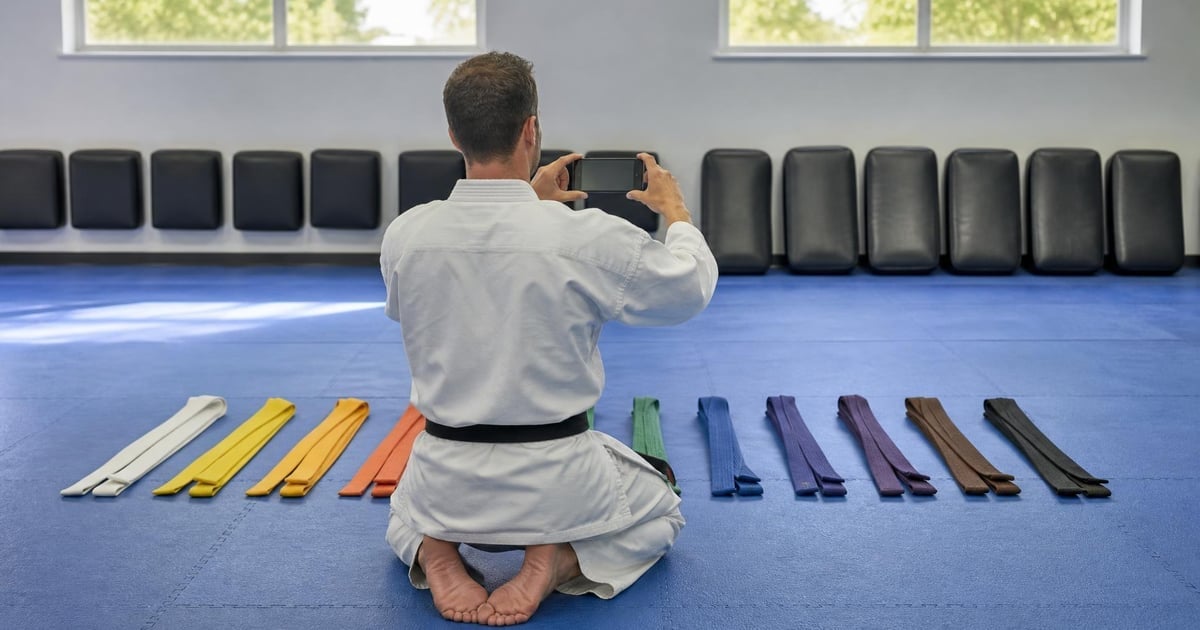
The best Instagram posts for a martial arts school answer what a nervous parent or adult beginner is wondering: is my child old enough, will they get hurt, is it too late for me, what do I wear? A feed of flying kicks and tournament medals impresses people who already train. Posts that explain the first class, the belts and the instructors bring in the ones who don't yet. Below are 40 ideas grouped by type, with the format that suits each. Pick four or five for the next two weeks.
The examples are made up to show the idea. Swap in your own style, classes and instructors, and skip anything that doesn't fit.
Why a feed of high kicks doesn't fill a beginner class
Your advanced students are impressive. To a parent with a four-year-old, or a forty-year-old who has never trained, an advanced sparring clip can look like a reason not to come.
Instagram's Adam Mosseri has said its top ranking signals are watch time, likes and sends. That was said in January 2025, and platforms change, but it's a useful test. "What happens in a first class for a four-year-old" gets watched to the end and sent to another parent. A tournament highlight mostly gets a like from families already with you.
So keep celebrating your students, and add the ideas below around them.
For new families and beginners
- What happens in a first class for a four-year-old, minute by minute.
- What to wear and bring to a first class.
- What parents do during class.
- Is it too late to start as an adult? Answered honestly.
- What if my child is shy? How your instructors handle it.
- How classes are grouped, by age and level.
- Is there sparring? When, how, and with what gear. Only what's true at your school.
- Answers to the questions parents ask before a trial class.
Belts and progress
- How belts and belt tests work, in plain words.
- What each belt color means in your style.
- How to tie a belt so it stays tied.
- What a belt test looks like, behind the scenes.
- What students practice between tests.
- Stripes, explained, if your school uses them.
- What a black belt actually means at your school.
- The first belt test, from the student's side, with permission.
Technique, one move at a time
- An instructor explains one technique in three steps.
- The most common mistake in a basic move, and the fix.
- A stance, explained.
- A drill to practice at home, safely.
- How to fall safely.
- The same technique at three levels.
- A warm-up, in thirty seconds.
- Why we practice forms or patterns, if your style has them.
The school and its values
- Meet each instructor: how they started training.
- Meet the owner: why you opened the school.
- Why kids bow at the start and end of class.
- Your school's rules, and the reasons behind them.
- How you keep classes safe.
- The mat before the first class of the day.
- What your instructors are learning: a seminar, a new rank.
- Your style's history, in one minute.
Classes and news
- This week's schedule, every Monday in Stories.
- A family class, where parents train too.
- The adult beginner class, and who it suits.
- Free first class week, with its real terms.
- Belt test dates, posted early.
Your students
- Milestones: a first stripe, a first belt, ten years on the mat.
- A parent's story, in their own words, with their permission.
- This or that: "Forms or sparring?" A poll in Stories is easy to answer.
Which format to use
- Reels for anything that moves: a technique in three steps, the bow-in, a first class in fifteen seconds. Here's how to make Reels with just your phone.
- Carousels for anything with steps: how belts work, what to bring, tying a belt.
- Single photos for a new belt, an instructor, the school.
- Stories for the schedule, belt test dates and polls.
Four things to keep you out of trouble
- Ask parents first, in writing. Most of your students are children. Ask at sign-up whether they can appear in posts, keep a list, and when in doubt film from behind or show hands and feet.
- Keep promises modest. "Stops bullying", "builds confidence guaranteed" or "black belt in two years" are promises you can't keep for every child. Show what happens in class, and let parents see the rest for themselves.
- Be honest with testimonials. Keep a family's story in their words, and if anyone gets something for sharing, the FTC says that connection should be disclosed.
- Be careful with music. Osborne Clarke warns that most platform music libraries aren't licensed for commercial use. The sound of the class, the kiai included, is often enough. This isn't legal advice.
How many of these should you post?
Three good posts a week is plenty for most schools, with at least one short video, and we go through the evidence in how often to post. A simple mix for one week:
- one for new families or about belts (1-16),
- one technique (17-24),
- one about the school, your classes or your students (25-40).
For turning trial classes into students, see how to turn a free trial class into a martial arts student, and for keeping them, how to keep martial arts students training.
If you'd rather not write them yourself
You teach every class, and video takes an afternoon you spend on the mat. IndieAM, which we make, plans a month of posts for your martial arts school, writes them in your voice and adds the pictures. It writes each video shot by shot, then finishes it from your own clips and photos, with words on screen, captions and a voice. You can tell it what to avoid, such as promising a black belt by a date, and add a rule such as never showing a child's face unless the parents agreed. You approve the plan and each post, and approved posts publish themselves to the Instagram, Facebook, TikTok and YouTube accounts you connect. Here's how it works for martial arts studios.
Or start with number 11 today. Film an instructor tying a belt in thirty seconds, and post it.