How to Take Landscaping Before and After Photos
By IndieAM ·
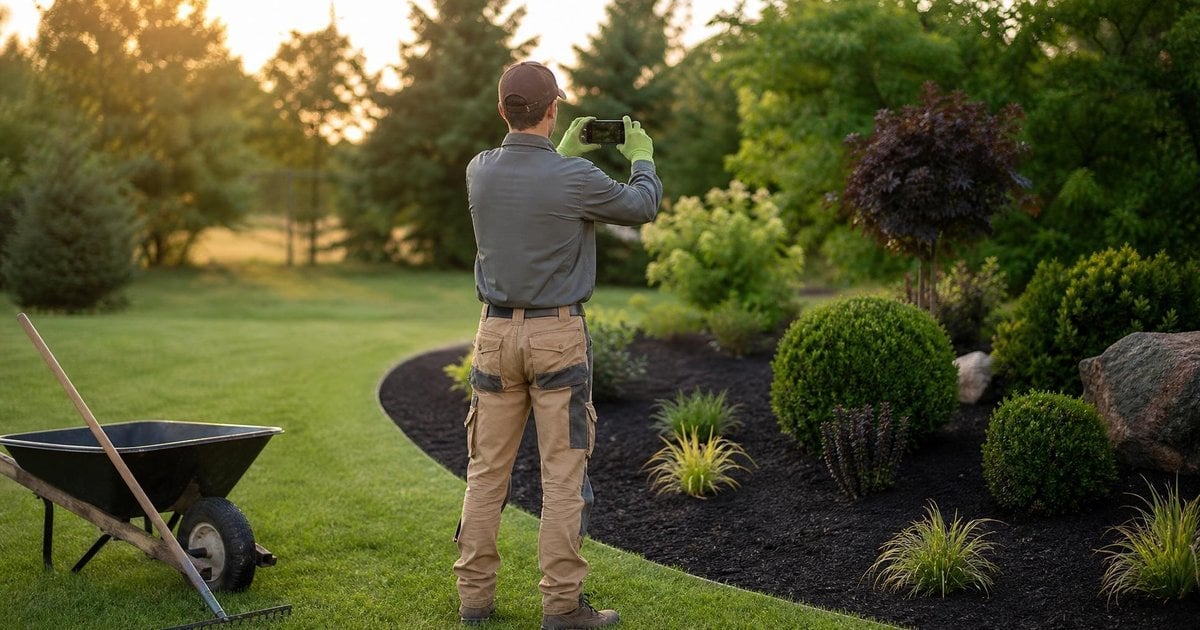
Good landscaping before and after photos need four things: the same spot and height for both photos, soft light, a clean frame with no house numbers or cars, and the homeowner's permission. A phone and two minutes on site are enough. Here's a simple routine your crew can follow on every job.
Why before and after photos matter
A clean edge or a fresh bed looks great for a day, then it's just a yard. Without a photo, nobody but the homeowner sees it. A before and after shows what you did in one glance, and it's the most convincing thing you can show a homeowner choosing between quotes.
1. Stand in the same spot twice
This matters more than anything else.
- Pick a spot you can find again: a corner of the driveway, the end of the path, a fence post.
- Hold the phone at the same height, chest height is easiest.
- Take the before first, before anyone touches anything.
- Line up the after using the same edges: the corner of the house, a tree, the fence.
2. Choose the right moment
- Soft light is best: early morning, early evening, or a bright cloudy day.
- Midday sun makes hard shadows and washes out the green.
- Shoot with the sun behind you, not in the frame.
- Water a fresh bed lightly after mulching, if you were going to anyway. It looks finished.
3. Keep the frame clean
- No house numbers, street signs or license plates. Crop them out or step to the side.
- No people unless they agreed.
- Move the tools, bags and the trailer out of the after shot.
- Keep the phone level, so the house doesn't lean.
4. Take a few kinds of photos
- The wide shot: the whole yard or bed, before and after.
- The detail: a crisp edge, fresh stripes, a pruned shrub.
- The crew at work, with their permission.
- The finished yard from the street, the way the homeowner sees it when they pull in.
5. Keep it honest
- No filters that make the grass greener than it is.
- Crop, straighten and brighten a little. That's enough.
- Only show your own work, on the job you say it is.
- Show the real before, without making fun of the old yard or the homeowner.
6. Ask the homeowner first
- Ask when they sign up whether you can share photos of their yard, and keep a note.
- Never say the address or the street in a caption unless they want you to.
- Send them the after photo. Many will share it.
7. Turn it into a short video
- Film five seconds of the before, a few seconds of the crew at work, and a slow walk past the finished yard.
- Add words on screen: what you did and how long it took.
- Be careful with music. Osborne Clarke warns that most platform music libraries aren't licensed for commercial use. A voiceover works well. This isn't legal advice.
Here's how to make Reels with just your phone.
A two-minute routine for the crew
- On arrival: the wide shot and one detail, from a spot you'll remember.
- On finishing: the same spot, the same height, the same detail.
- Walk to the street: one shot of the finished yard from the sidewalk, with no house number.
- That evening: put the best pair in one shared album, named by job type, not address.
Where to use them
- Instagram and Facebook, as a side-by-side or a short video.
- Your Google Business Profile, so people searching nearby see your work.
- Your quotes, to show a homeowner what a similar job looked like.
For getting new clients with them, see how to get more landscaping clients.
If you'd rather not write the posts yourself
Your crew takes the photos. IndieAM, which we make, does the rest: it plans a month of posts for your landscaping company, writes them in your voice and turns your photos and clips into reels, carousels and photo posts, with words on screen, captions and a voice. A post about a client's yard waits for your own photo. Add a rule such as never showing a house number, and it follows it. You approve the plan and each post, and approved posts publish themselves to the Instagram and Facebook accounts you connect. Here's how it works for landscapers.