40 Instagram Post Ideas for Dance Studios
By IndieAM ·
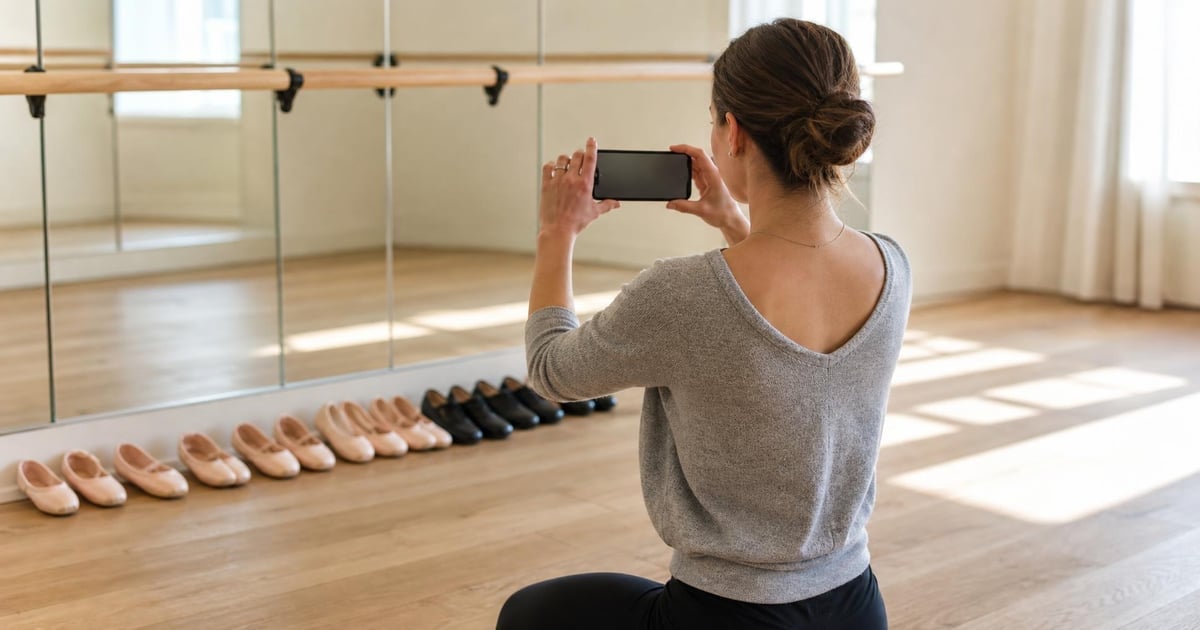
The best Instagram posts for a dance studio help a parent picture their child walking in for the first time. Most parents choosing a studio aren't dancers. They want to know what to buy, what happens in class, whether the teacher is kind, and whether their shy four-year-old will be OK. Posts that answer those questions do the convincing for you. Below are 40 ideas grouped by type, with the format that suits each. Pick four or five for the next two weeks.
The examples are made up to show the idea. Swap in your own classes and teachers, and skip anything that doesn't fit.
Why a feed of competition solos doesn't fill a beginner class
Your advanced dancers are wonderful to watch. To a parent with a three-year-old, though, a competition solo answers none of their questions, and to an adult beginner it can look like proof they're too late.
Instagram's Adam Mosseri has said its top ranking signals are watch time, likes and sends. That was said in January 2025, and platforms change, but it's a useful test. "What happens in a first class for three-year-olds" gets watched to the end and sent to the other parents in a group chat. A polished solo mostly gets a like from families who are already with you.
So keep sharing your dancers' best moments, and add the ideas below around them.
For new families
- What to wear to a first class, for each age.
- What happens in a first class for three-year-olds, minute by minute.
- What parents do during class: watch, wait in the lobby or come back later.
- How to tie ballet slippers so they stay on.
- Hair for class, in one minute.
- What if my child cries or won't join in? How your teachers handle it.
- How classes are grouped, by age and level.
- Answers to the questions parents ask before enrolling.
The styles, explained
- Ballet, tap, jazz or hip hop: how to choose.
- What a combo class is, and who it suits.
- What contemporary looks like, for parents who've never seen it.
- Why ballet helps in every other style.
- One step from each style, side by side.
- What changes as dancers move up a level.
- What the competition team is, and how it's different from regular classes. Only if you have one.
- Adult classes: what the first one is like.
Technique, one tip at a time
- A teacher explains one step in three parts.
- The most common mistake in a basic step, and the fix.
- A warm-up to do at home before class.
- How to practice between classes without a studio.
- Why we point our feet.
- How to stretch safely as a young dancer.
- Turnout, in plain words.
- The same step at three levels.
Meet the studio
- Meet each teacher: why they started dancing, and their favorite class to teach.
- Meet the owner: why you opened the studio.
- The studio before the first class of the day.
- The lobby at 4 p.m., when the little ones arrive.
- Your studio rules, and the reasons behind them.
- What your teachers are learning: a workshop, a convention, a certification.
Recital and the season
- Enrollment dates, posted early and again near the deadline.
- How the recital works, from costumes to curtain call.
- Why every dancer is in the recital, if that's your studio's way.
- Costume day. Rows of costumes on a rail, without faces.
- Recital tickets: when, where and how. Post them more than once.
- Dress rehearsal, behind the scenes.
- Summer camps and intensives, with real dates.
Your dancers
- Milestones: first recital, moving up a level, ten years at the studio.
- A parent's story, in their own words, with their permission.
- This or that: "Ballet or tap?" A poll in Stories is easy to answer.
Which format to use
- Reels for anything that moves: a step in three parts, the first ten minutes of class, a combination. Here's how to make Reels with just your phone.
- Carousels for anything with steps or choices: what to wear, the styles side by side, how the recital works.
- Single photos for a new teacher, the studio, a milestone.
- Stories for enrollment reminders, polls and this week's news.
Four things to keep you out of trouble
- Ask parents first, in writing. Most of your dancers are children. Ask at enrollment whether their child can appear in posts, keep a list, and when in doubt, film feet, hands and backs, which often tell the story just as well.
- Be careful with music. Dance videos almost always have music, and Osborne Clarke warns that most platform music libraries aren't licensed for commercial use. Use music you have the rights to, or add a voiceover and keep the class music low.
- Be honest with testimonials. If you share a family's story, keep it in their words, and if anyone gets something for sharing, the FTC says that connection should be disclosed.
- Keep promises modest. "Builds confidence" is a hope, not a guarantee. Show what happens in class and let parents draw their own conclusions. This isn't legal advice.
How many of these should you post?
Three good posts a week is plenty for most studios, with at least one short video, and we go through the evidence in how often to post. A simple mix for one week:
- one for new families or about the styles (1-16),
- one technique tip (17-24),
- one about the studio, the season or your dancers (25-40).
For turning those posts into enrollments, see how to get more dance students, and for the end of the season, how to keep dancers enrolled from one season to the next.
If you'd rather not write them yourself
You teach from after school until late, and video takes an afternoon you don't have. IndieAM, which we make, plans a month of posts for your dance studio, writes them in your voice and adds the pictures. It writes each video shot by shot, then finishes it from your own clips and photos, with words on screen, captions and a voice. You can add a rule such as never showing a child's face unless the parents agreed. You approve the plan and each post, and approved posts publish themselves to the Instagram, Facebook, TikTok and YouTube accounts you connect. Here's how it works for dance studios.
Or start with number 2 today. Film the first ten minutes of your youngest class from the back of the room, feet and backs only, and post it.